Transparent Photovoltaic Building Glass: A Buyer’s Guide
Transparent photovoltaic building glass lets a building generate electricity through the same windows, skylights, and facades that bring in daylight. For owners of commercial properties, it offers a way to add solar capacity without covering a roof. This guide explains how it works, where it fits, and how to judge whether it pays off.
Quick answer: Transparent photovoltaic building glass is architectural glass with built-in solar cells that generate power while letting light through. It produces less power per square foot than opaque panels. However, it can offset costs because it replaces conventional glass or cladding.
What Is Transparent Photovoltaic Building Glass?
Transparent photovoltaic building glass is glass that doubles as a solar generator. A thin semiconductor layer or a pattern of cells sits inside the glass unit. It absorbs part of the sunlight and converts it into electricity.
This approach belongs to a wider category called building-integrated photovoltaics, or BIPV. In BIPV, the solar material becomes part of the building envelope. It is not added on top afterward.
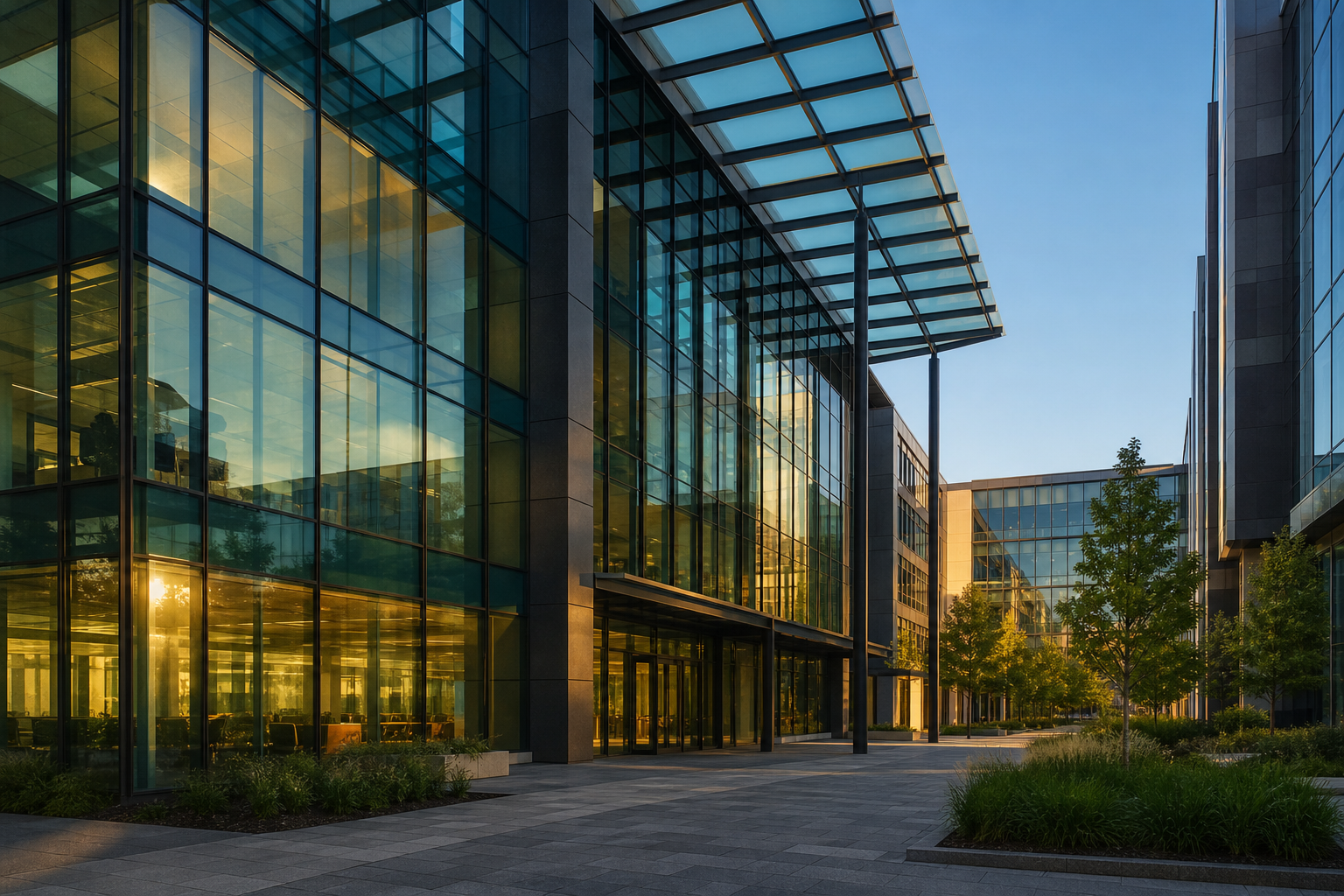
A glass facade like this is where transparent photovoltaic building glass can replace conventional glazing.
How Solar Windows Turn Daylight Into Power
Sunlight strikes the glass, and the photovoltaic layer absorbs some of it. That light frees electrons in the semiconductor, which creates direct current. An inverter then converts it to alternating current for the building.
Different products balance light and power differently. Some use tiny spaced cells with clear gaps between them. Others use a thin film that tints the whole pane. As a result, a darker pane usually makes more power, while a clearer pane lets in more daylight.
Where Photovoltaic Glass Fits Best
Photovoltaic glass works best where a building needs glass anyway and sunlight is strong. Typical locations include:
- Curtain walls and sun-facing facades
- Skylights, atriums, and glass roofs
- Canopies, walkway covers, and parking shades
- Balcony railings and glass partitions
Orientation and shade matter a great deal. Vertical facades receive less direct sun than a roof does. Therefore, a high-rise with limited roof space may benefit more than a low building with open roof area.
Benefits and Limits for Commercial Buildings
| Factor | What to expect |
|---|---|
| Power output | Lower per square foot than opaque panels |
| Material offset | Replaces glass or cladding you would buy anyway |
| Heat control | May reduce solar heat gain, depending on product |
| Design | Keeps views and daylight, with a range of tints |
The main limit is output. Glass that lets light through cannot match a dense rooftop array. In contrast, its strength is turning an expense, the building envelope, into a partial energy asset. For broader context, see these advantages of solar energy for companies.
How to Evaluate Photovoltaic Glass Step by Step
A simple review keeps the decision grounded in your own numbers. Follow these steps.
- Review your utility bills. Gather twelve months of bills and note usage, demand charges, and your rate per kilowatt-hour.
- Map your glass surfaces. List facades, skylights, and canopies, with their orientation, size, and shading.
- Define your glass requirements. Decide how much light, color, and heat control each area needs.
- Request a production estimate. Ask for annual kilowatt-hours based on your location and glass type.
- Compare against your energy costs. Weigh output against rates, net metering rules, and the cost of the glass it replaces.
Net Metering and Your Energy Bill
Savings depend on what you pay for power and how your utility credits solar output. Under net metering, excess electricity sent to the grid can earn bill credits. Rules vary by state and utility, so check them early. The U.S. Department of Energy publishes general solar guidance for building owners.
Demand charges also matter. Solar generation may trim some peak demand, although it will not always do so. Consequently, an audit of your bills should come before any purchase.

Reviewing utility bills first shows how much solar glass could realistically offset.
Getting Expert Help With Solar Glass Projects
Nexusenergyexchange.com is a licensed energy brokerage and utility consulting firm based in Toledo, Ohio, with 22 years in business. It has a partnership with Onyx Solar, a maker of transparent photovoltaic glass. Its team also shares information on commercial solar and renewable energy.
For buildings that need dependable on-site power, the firm also offers the JouleBox hybrid generator, a fossil-fuel-free generator line. To discuss your energy costs, call 419.466.2622 or use the contact form to request an energy analysis.
Frequently Asked Questions
What is transparent photovoltaic building glass?
Transparent photovoltaic building glass is architectural glass with solar cells or thin-film layers built in. It lets daylight through while generating electricity.
How does photovoltaic glass generate electricity?
A semiconductor layer in or on the glass absorbs part of the sunlight and converts it into direct current. An inverter then converts that to usable alternating current.
Is photovoltaic glass as efficient as rooftop solar panels?
No. Glass that passes more light generally produces less power per square foot than standard opaque panels. Its value comes from replacing materials you would buy anyway.
Where can photovoltaic glass be installed?
Common uses include curtain walls, skylights, canopies, atriums, and railings. Sun-facing surfaces with little shade perform best.
Does transparent photovoltaic building glass reduce cooling costs?
It can. Many products block some solar heat and ultraviolet light, which may lower cooling loads. The effect depends on the specific glass and climate.
How much does photovoltaic glass cost?
Pricing varies by product, size, and project, so no single figure applies. Compare the installed cost against the conventional glass and cladding it replaces.
Can photovoltaic glass work with net metering?
Often yes. If the system is grid-connected and your utility offers net metering, excess power may earn bill credits. Rules differ by state and utility.
How long does photovoltaic glass last?
Lifespan depends on the manufacturer and product. Ask for the warranty terms and tested performance data before you buy.
What is the difference between photovoltaic glass and solar window film?
Photovoltaic glass has the power-generating layer built into the glass unit. Film is applied to existing glass and is usually a retrofit option.
Is photovoltaic glass worth it for older buildings?
It can be when you are already replacing glazing or renovating a facade. Standalone retrofits are harder to justify on energy savings alone.
What mistakes should buyers avoid?
Common mistakes include ignoring shading, skipping a production estimate, and overlooking local incentives and utility rules. Reviewing your energy bills first helps avoid all three.
How can a business get help evaluating solar options?
An independent energy advisor can review your bills, usage, and rates before you commit. Nexusenergyexchange.com offers solar information and partnerships, and you can reach the firm at 419.466.2622.
Conclusion
Transparent photovoltaic building glass turns windows and facades into modest power sources while keeping daylight and views. It produces less than rooftop panels, but it offsets the cost of glass you already need. Start with your bills, orientation, and local net metering rules, then request a production estimate. To explore whether it fits your property, contact Nexusenergyexchange.com at 419.466.2622 for an energy analysis.